
Online Brand Protection in 2026: How Brands Can Fight Counterfeits Smarter

Blog title heading will go here
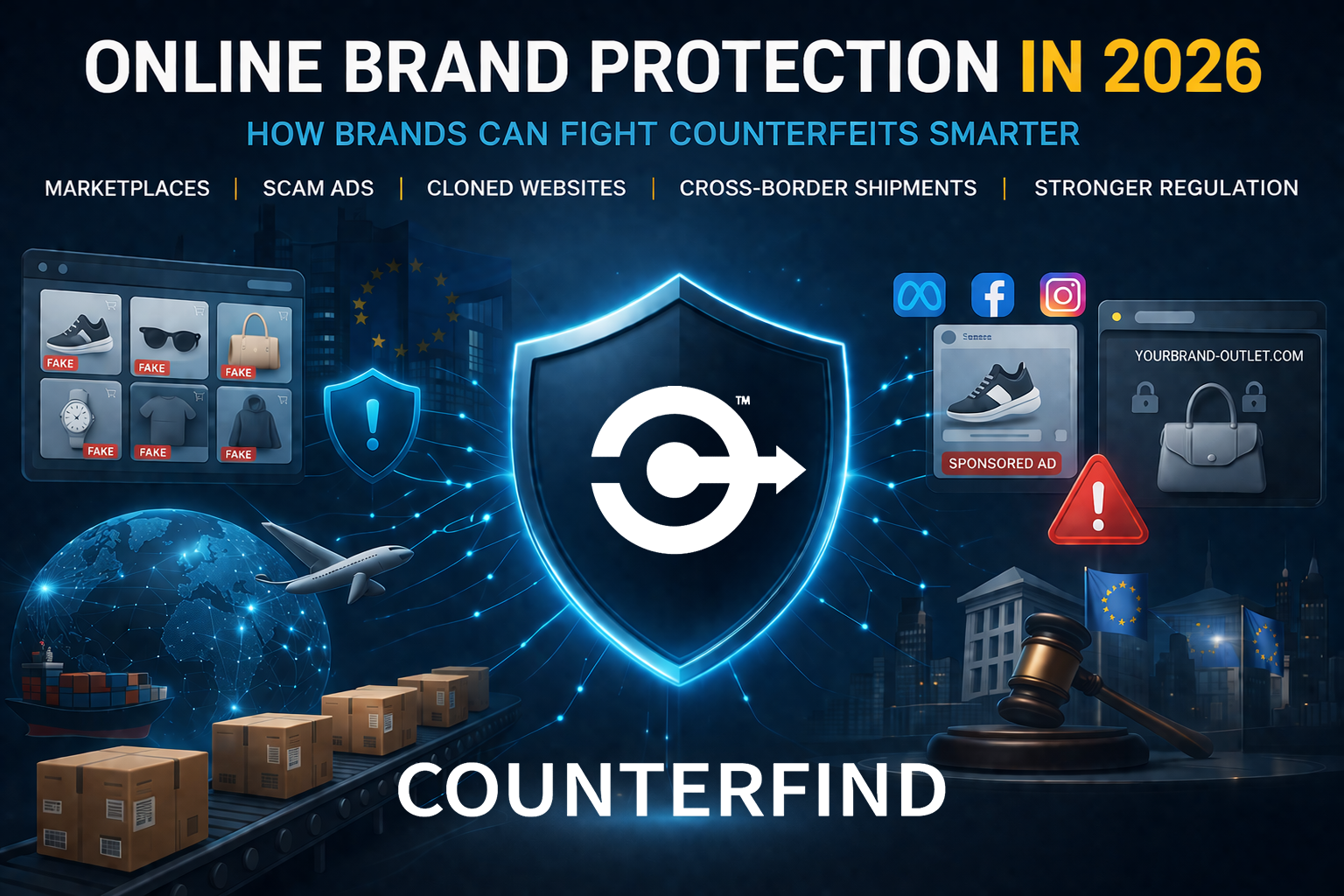
Online brand protection has changed.
It is no longer enough to remove a fake listing here and there and hope the problem slows down. In 2026, counterfeit activity is showing up across marketplaces, social ads, cloned websites, and cross-border parcel networks at the same time. Regulators are responding by putting more pressure on platforms themselves, not just on the bad actors using them.
Marketplaces are under more pressure than ever
One of the clearest signals came on February 17, 2026, when the European Commission opened formal proceedings against Shein under the Digital Services Act, including scrutiny of the systems it uses to limit illegal products. That follows the Commission’s July 2025 preliminary finding that Temu had not properly assessed the risks of illegal products on its marketplace, and a June 2025 action in which the Commission accepted certain AliExpress commitments while also taking further action tied to illegal products.
That shift matters because it changes the standard brands should use when evaluating enforcement. The issue is no longer only whether a single fake item appears online. The issue is whether a platform’s controls are strong enough to stop repeat sellers, repeat listings, and repeat abuse patterns from scaling. That is a much bigger brand-protection challenge.
The counterfeit problem is bigger than listings
Counterfeit risk is also moving downstream into logistics and fulfillment. EU customs said that 4.6 billion small packages entered the EU market in 2024, about 180 direct shipments every second, and that more than half of 20,000 checked toys and small electronics failed to meet EU product rules. Reuters separately reported in January that the number of low-value e-commerce parcels entering the EU reached 5.8 billion in 2025, a 26% year-over-year increase.
For brands, that means a takedown is no longer the finish line. Even after a listing disappears, the seller network, domain infrastructure, ad accounts, and parcel pipeline behind it may still be active. Effective protection now depends on connecting those signals instead of treating each incident in isolation.
Scam ads and cloned websites are now part of the same threat
The consumer journey into counterfeit exposure often begins long before a marketplace product page. Meta said last week that it removed more than 159 million scam ads in 2025. But Reuters reported on March 18, 2026 that the UK Financial Conduct Authority found 1,052 illegal ads for high-risk financial products on Meta platforms in a single week, and that 56% came from advertisers the FCA had already flagged to Meta.
That same pattern is visible in counterfeit and impersonation campaigns. Reuters reported in February that fake Milano Cortina merchandise sites were being promoted through fraudulent ads on Meta platforms, sending users to lookalike websites designed to collect payment details, addresses, phone numbers, and even login credentials; victims could receive counterfeit goods or nothing at all.
For brand owners, the lesson is simple: ad monitoring, impersonation monitoring, and marketplace enforcement now belong in the same workflow.
The old marketplace problems are still here too
The newest USTR Notorious Markets review, released March 3, 2026, identified 37 online markets and 32 physical markets reported to engage in or facilitate substantial counterfeiting or piracy. The report continues to highlight evolving counterfeiting patterns across e-commerce and social commerce sites, which reinforces that repeat-offender marketplace behavior remains a major unresolved problem.
Court action is reinforcing that pressure. Reuters reported in February that Estée Lauder sued Walmart, alleging counterfeit versions of products from brands including Clinique, Tom Ford, Le Labo, La Mer, and Aveda were sold through Walmart’s website. Cases like this keep attention on the question brands care about most: when counterfeit offers repeatedly reach consumers through a platform, where does seller misconduct end and marketplace responsibility begin?
“Made in America” claims are now part of the conversation too
Brand protection is also expanding beyond classic trademark counterfeiting. On March 13, 2026, the White House issued an executive order directing the FTC to prioritize enforcement against false “Made in America” and similar American-origin claims, specifically noting the role digital marketplaces can play in spreading those claims.
That matters because deceptive origin claims can erode trust just as quickly as counterfeit products do. For brands that compete on quality, sourcing, domestic manufacturing, or premium positioning, country-of-origin monitoring is becoming part of modern online brand protection.
What brands should do now
Brands need a more connected response model.
That means moving beyond one-off takedowns and focusing on the bigger pattern:
- repeat sellers
- repeat creative and logo misuse
- scam ads using branded terms
- cloned domains and storefronts
- misleading origin claims
- cross-border shipment patterns tied to known bad actors
The brands that win in this environment are the ones that can see the network behind the infringement, not just the single incident in front of them.
How CounterFind helps brands respond
This is where CounterFind can make a real difference.
CounterFind helps brands take a more complete approach to online brand protection by supporting efforts such as:
- monitoring marketplaces, paid ads, and impersonation activity together
- identifying repeat-offender patterns across sellers, listings, domains, and creatives
- helping teams document evidence more clearly for enforcement, legal review, and escalation
- prioritizing the most damaging threats first so brands are not buried in manual review
Instead of treating counterfeits, scam ads, and cloned sites as separate problems, CounterFind helps brands address them as part of one connected threat landscape.
If your team is still fighting counterfeits one listing at a time, it is time for a broader strategy.
CounterFind helps brands detect, document, and act on counterfeit threats across marketplaces, ads, domains, and digital channels. Contact CounterFind to see how a more connected brand-protection workflow can reduce risk, protect revenue, and preserve customer trust.
